
Elimination Communication, Potty Independence, Potty Training

Is EC A Lot Of Work?

This is a common question I get. Isn’t practicing Elimination Communication really hard? Doesn’t it take a lot of time? Isn’t it exhausting? Doesn’t your whole life then revolve around your baby’s toileting needs?

First off, EC isn’t hard, parenting is! EC is just another tool in the parenting repertoire. It’s goal is to enhance the communication between parents and babies 0-18mth, specifically around toileting needs, but this enhanced communication and attentiveness tends to pour over into other interactions, and ECing parents often feel more attuned to their babies because of it. Being more in sync with your baby actually makes parenting a lot easier, in both the short and long term! Are there frustrating times when you practice EC? Yes. Will it always make sense? Nope. But once you establish an EC practice in your home and it becomes normalized as part of your life, it’s not hard, it’s just routine. And in the long run, it’s a routine that makes your life much easier!

In terms of the amount of time it takes, or the “extra work” it is, that’s all a matter of perspective. Does it take a lot of time to take a baby to the potty several times a day? Perhaps. But so does changing that same baby’s poopy diaper, and I can guarantee a potty success is more fun for both of you! Does an EC family spend more time doing toileting-related things? In the short-term, absolutely. But that same family is much less likely to be changing the diapers of their 3 year old when the time comes. They are also less likely to experience power struggles over potty training that can be emotionally taxing on everyone. And they are much more likely to have a toilet independent child between the ages of 18mth and 2.5years, eliminating a tonne of diaper waste, and/or drastically reducing the laundry for cloth diapers. When people tell me that they couldn’t even think about EC because it seems like so much work, my response is to say that I couldn’t think of having to change diapers on an older toddler or preschooler and going through a later-age potty training process because that THAT seems like a lot of work and completely exhausting. Give me a toddler out of diapers and an organic path to toilet independence without power struggles any day!

All parents do a lot of work. All parents do a lot of work surrounding toileting. It’s how we distribute that work that is different. All it is, is a shift in perspective.

Those who believe that EC takes over your life, and all you ever do is think about pottying are mistaken. EC can be practiced full-time, part-time or even casually, and the process is beneficial no matter which path you choose. In fact, it is often the case that families practicing part-time have toddlers out of diapers sooner than those practicing full-time, because they tend to give their kids more room to breathe in the process, which removes any [unintended] pressures. EC also doesn’t mean you have naked babies all the time who pee on the floor. Diaper free time every day has been shown to be beneficial to all babies, but ECing families almost always use a backup of some kind, and usually that’s a diaper. EC isn’t reserved for crazy people or toileting extremists – almost anyone can practice it within their life context without it becoming overwhelming, weird, or unsanitary!


Elimination Communication, Potty Independence, Potty Training

Feeling Lucky!

turkey on potty

Happy Thanksgiving everyone!

This Thanksgiving, I want to take some time to remember how lucky I am. I am lucky to have two amazing little boys; they warm my heart, make me laugh, and tickle my soul every day (…most of the time 😉) and I couldn’t imagine my life without them! I am lucky to have an amazing partner – he’s a wonderful Dad who is involved in every aspect of our children’s lives, a loving and supportive companion who keeps me going when I’m low, and he really contributes his half to the running and nurturing of our family. I am lucky to have the extended family we have – my boys are so lucky to be growing up with four loving grandparents, and lots of wonderful aunts, uncles and cousins. I am lucky to have friends who always lend an ear when its needed, and who enrich our lives and help us out so much day-to-day. And I am lucky for all the amazing and interesting people who I teach; they each add something new to my understanding of the complexity and uniqueness of individual life contexts, and how important those are to the ways we learn and approach tasks in our lives. I am truly thankful to be so lucky in all of this.

I am also thankful that I happened upon some information on Elimination Communication before my first son was born, and that I had the time and resources I needed to research it more. I am thankful that I had the confidence and determination to commit to practicing it, even though it’s unusual in North American society. And I am thankful for all of its results: that it brought me closer to my boys and deepened our communication; that it kept my boys in touch with their own bodies and elimination needs, helping to empower them in the process; that it helped our family reduce its environmental impact through fewer cloth diapers washed and fewer disposable diapers thrown out; that it helped our family to save money on diapers and laundry; and that it led to our first son being potty trained in a stress-free organic process that was finished by 21mths (our second son is in progress at 16mths – I’ll have to report back!).

I am also thankful for my Go Diaper Free training – for being qualified to consult for and coach Elimination Communication and Non-Coercive Potty Training and for being in a position to help children and their families reach toilet independence faster and without pressure, no matter when they are beginning.

And, of course, I am thankful for all of you – My Go Diaper Free Family! And I want to wish everyone a very happy and healthy Thanksgiving!

What makes you feel lucky or why are you thankful?

Elimination Communication, Potty Training

Teaching & Learning in the Potty Process

September. It’s the start of Autumn; a time of transition. For many people it’s back to a regular routine. It’s back to school, too: back to teaching and back to learning. What better time could there be to begin your family’s journey to toilet independence?

If you have (or care for) a baby 0-18mth, elimination communication is an amazing way for you and your baby to teach and learn from each other. It focuses on finding ways to communicate about elimination needs, and on learning to listen to and tune into each other in new and profound ways. For toddlers and preschoolers (18mth+), potty training is the unlocking and mastering of a whole new set of skills – an empowering right of passage.

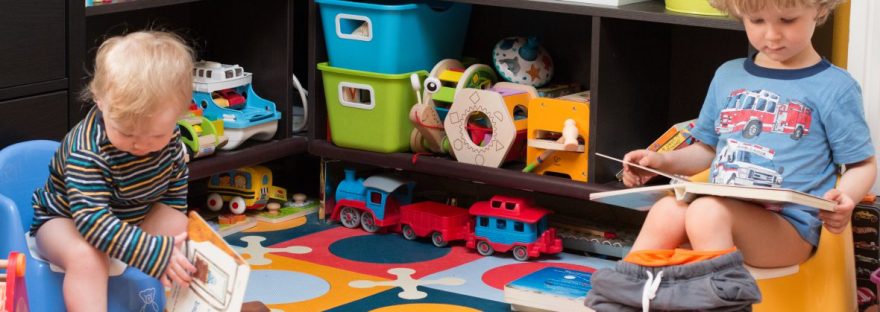
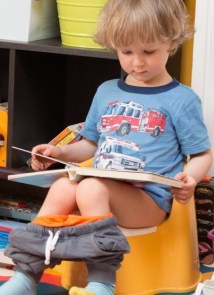
If you don’t have time to read this whole post, I would encourage you to take a look at the video of my younger son demonstrating how he gets to and sits on a potty. He takes delight in the process and shows that even very young toddlers (he’s 15mth) can learn to take themselves to a potty without force, coercion, or trauma:

https://www.youtube.com/watch?v=VpK2rxHo7l0

Some of the confusion surrounding potty training in today’s society is the pervasive idea that children must wait to begin their toilet learning until they have somehow met a set of “readiness” requirements. That, one magical day, a child will spontaneously show interest in using a potty or toilet for the first time, and from that point on the road to a potty-trained child should be straightforward and fairly easy. This is nonsensical, for two reasons:

It presumes that your child is not ready to learn.

To not be ready to learn new things, one must either be lacking physical or developmental ability, or one must be missing the prerequisite information. Neither is true.

A common myth that is parroted about the parenting and medical communities is that babies up until 18mth do not have awareness of when they eliminate, and do not possess sphincter control. As the mom of a baby who began pooping in a potty at 3 weeks old, never pooped outside the house (or a house we were visiting) after 4 months old, and had his last poopy diaper ever at 11 months old, I can confidently tell you that babies are born with sphincter control and awareness of when they eliminate. The issue arises when we rely exclusively on diapers for elimination needs. This teaches babies that the appropriate place to eliminate is in their diaper, that they will never be required to hold their pee or poop, and when disposables are used, it takes away the sensation of wetness that helps babies to stay attuned to their own bodies and when they pee.

As for prerequisite information – how could there be any? This is one of our very basic needs. From the day we are born, we need to pee and poop. You don’t have to know anything more than that to be ready to learn when and where to do it!

It presumes that toilet learning must be child-led and initiated, rather than parent-led and taught.

Potty training doesn’t have to be an anxious waiting game. Children don’t spontaneously show interest in a potty. They can watch and mimic their role models, looking for ways to be more grown up (which relies on parents teaching their children through modelling and active engagement in the potty process), or, as is all-to-common, they can feel peer pressure to use a potty or toilet like their friends do in childcare or preschool settings, and then seek to fit in with their friends.

Toilet learning can begin now, no matter how old your child is. They have the ability, they have the prerequisites. All they need is the teacher – and that’s you!

There’s a common myth that scares parents into waiting indefinitely: that early potty training will cause psychological damage to your child. If that were the case, it would be scary! What isn’t explained is the caveat. The issues arise when potty training is forced. Who being forced into something doesn’t experience some degree of psychological damage, never mind a baby or young child! Starting young (whether at 1 day or 18mth+) doesn’t mean the process is in any way forced. If you honour your child’s abilities, respect their desire to learn, and step into the role of their teacher, toilet learning can be a natural and organic process beginning at any age, without fear of causing damage.

If you didn’t view it above, here is a video of my younger son demonstrating just a little of the teaching in our house. At 15mth, he gets himself onto the potty on his own, and is delighted by the process!:

https://www.youtube.com/watch?v=VpK2rxHo7l0

Elimination Communication, Potty Independence, Potty Training

Beginning the Journey to a Potty Independent Child

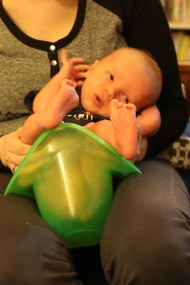
I am so excited to be in a position to helpEC at 4wks families embark on their own journeys to potty independence! My own family’s adventure began a little over three years ago, when my first son was 2 weeks old. I had stumbled across information on Elimination Communication while researching diaper consumption, and was instantly fascinated by the idea. Everyone I spoke to thought I was completely crazy when I would talk with enthusiasm about babies who used potties from birth, and when I became pregnant and was obviously determined to give it a try, I knew that they secretly thought I would fail and give it up.

Then, on my first day of trying it out, at only 2 weeks old, I caught our first pee, and was hooked! At 11mth we changed our last-ever poopy diaper, and at 14mth we packed away IMG_3144 pickdaytime diapers for good. Although we hit some pretty rough (so, so rough!) bumps on the road, our little guy was completely potty trained at 21mth.
I watched as my new mom friends struggled with the idea of potty training, especially at a young age. It was evident that societal pressure was telling them that it was “too early” to start, and that somehow their child (probably around 3 years old) would show magical “signs of readiness,” which would be their cue to start. Because of these inhibitions, I watched parents experience anxiety over whether or not their child would be potty trained in time for kindergarten, because they were being told their children weren’t “ready yet.” And frankly, it was awful to watch. It was awful for the children to be denied the opportunity to take control of their own hygiene needs, and it was awful for the parents to experience so much fear, anxiety, and guilt over the potty training process. I knew I had to help, and I completed the Go Diaper Free Certified Coach Training Program so that I would have the tools to do so.

Now I have worked with newborn babies beginning their Elimination Communication journey, with young toddlers who are potty training much earlier than the societal norm, and with preschoolers who didn’t start until after their third birthday. No matter the age, I am so proud to help babies and children (and their families) reach toilet independence.

So, when’s the right time to start? That depends entirely on potty indpendentyou! Your child is ready when you are ready, whether at 1 day old or at 3+yrs. No one’s journey is in any way invalid, and no one should ever experience guilt, fear, or anxiety over their child’s potty learning. Parenting is hard enough already, without adding on that stress!

In my [extremely biased!] opinion, I think the best time to start is NOW, whatever the age of your child. It is never too early (or too late!) to help a child to recognize their own bodily signals and to teach them to eliminate in potties and toilets, rather than soiling themselves. This can be done either through Elimination Communication (for babies 0-18mth), potty training (toddlers and preschoolers 18mth+), or a combination of both. If you, as a parent, are feeling ready (and no worries if you aren’t – there’s a lot of cultural conditioning that parents have to combat here!), this journey can start NOW!