
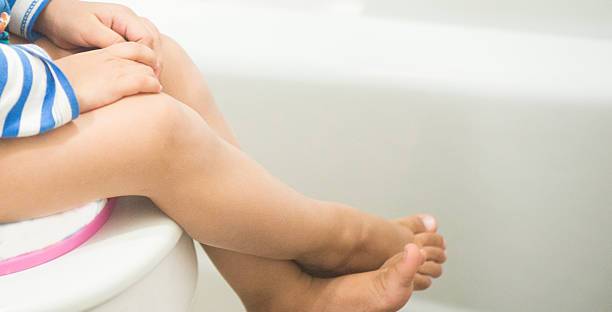
Elimination Communication, Potty Independence, Potty Training

Is There a “Right” Time to Potty Train?

Just as there is never a perfect time to get married, or the perfect time to have a baby, you may never feel like there is a perfect time to potty train.

Our cultural messaging leads us to be apprehensive of the potty training process to begin with (I’ve written about that, here). We fear doing it the “wrong” way, and sabotaging the process. We fear pressuring our kids or causing them any kind of trauma or damage. We worry our kids aren’t “ready.” We dread others’ opinions and advice (Don’t leave it too late!; don’t push it too early!) Add in our complicated lives, our over-extended schedules, and our constant connectedness through technology, and it’s no wonder parents are putting off potty training until later and later with each passing year.

So, when is the “right” time to start your child’s journey to potty independence? The interesting thing is that the answer depends entirely on you, and not your child.

Your child is ready to begin their journey now, no matter their age or abilities. For young babies, this will likely be through Elimination Communication to start, but toddlers as young as 18 months (and in some cases, younger) are fully capable of potty training. It doesn’t matter if they “show interest.” It doesn’t matter if they can “sing the ABC song.” It doesn’t matter if they can verbalize at all.

In just 2 generations, Western culture has forgotten its entire history of successfully potty training children by 18mth of age, but this is actually still the norm throughout most of the world. Read about the Myth of Readiness, if you are interested in this topic.

So, if our children are ready, what’s stopping us from doing this right now? Well, we are – the parents. It’s our stress, our worry, our investment in keeping every scheduled activity under the sun, our fear of failure and our lack of confidence and clear purpose in the process. Successful potty training requires dedication and focus, and an attitude shift that prioritizes your child’s toilet learning over other things in your life… for a very short time. In reality, it’s a tiny blip in your relationship with your child, that will give the gift of toilet independence for life.

If you are waiting for the perfect time to potty train, it may never come. You, the parent, have to make it the right time to potty train. You have to decide that teaching your child to take care of their personal hygiene needs, ditching the mess and waste (not to mention, expense!) of diapers, and completing this important right of passage is important enough to you and your child that you will make it a priority. You, the parent, have to let go of any stresses that are holding you back. You, the parent, have to proceed with clarity and confidence, becoming a teacher and guide for your child.

So, when should you start? The earlier the better, as long as you can wrap your head around the importance of the task and the commitment it requires. A casual attitude from the parent will result in a casual attitude from the child. You can have the same success in 12 days as you would have in 12 months – all without causing any damage to your child or using any coercive methods. It’s all in the attitude with which you approach it!

Give yourself permission to trust in your child’s ability as a learner, and in you as a teacher. Give yourself permission to prioritize this process for a short time, even if it clashes with your scheduled activities. Give yourself permission to take the process seriously, and to set clear boundaries for your child so they can take it seriously, too. Toddlers feel more secure and freer to explore within known limits and established expectations – give them the gift of that security. And once you’ve wrapped your head around all of that… go for it. Begin now!

Now, is the right time to start!

Elimination Communication, Potty Independence, Potty Training

Pressure, Pushing, & Potties, Oh My!

I want to write today about something that comes up over and over on every parenting forum and group I see. As soon as someone posts about potty training, there is a flood of comments of: “don’t push it,” “no pressure,” and “take it slow.”

Somewhere along the way (in response to the “wait for readiness” campaign, which I talk about on my Readiness Myth page), our cultural perception became that anything but child-initiated potty training (from a child who is also likely 3yrs+) is inherently laced with rushing, pressure, and coercion; that potty training as an early and/or parent-led process will put undue stress on a child, sabotaging success and perhaps even causing long-term damage, either psychologically or physically.

I’ve written before about the Fear of Potty Training, which feeds into this, but today I wanted to address the difference between moving at a quick pace, within clear, defined boundaries, and moving at a gradual pace, within nebulous or inconsistent boundaries.

For some reason, setting boundaries has become difficult for many parents in our society. But toddlers and preschools thrive in a predictable world of routines, rituals, and rules. When they know and understand the limits, they feel the freedom to explore everything within those limits freely and comfortably, whereas children who are constantly seeking their boundaries, or whose boundaries are inconsistent, generally feel more anxiety and less freedom to explore.

As parents, we are our young children’s literal lifelines, and they instinctively know this. They have an evolutionary imperative to depend on us, 100%, to be their capable guides and leaders in the process of growing up. They want and need to feel like we’re in control, that we always have their backs, and that we can handle all of their moods and behaviours without judgement, no matter what. Yes, they ultimately want to be independent, and they will constantly try out how that feels. But for now, they need to know that they can depend on us to get them there.

What does this mean, for potty training?

Potty training your child clearly and quickly at a young age (18mth+, and occasionally even younger), is actually GENTLER, than potty training your child casually and gradually, and waiting for them to tick off all of the “readiness” boxes (usually at around 3yrs).

Why?

Because giving them clear boundaries to operate within aligns with their developmental life stage, and makes things EASIER for them. Because it puts you, the parents, in the leadership role, which is what your child wants and needs from you. Because giving children the freedom to explore within the boundaries you have set helps them to learn the skill faster and with more confidence, and with much less confusion.

In all but Western countries, the NORM is for children to be potty trained between 12 and 18mths. Their cultures [rightfully] believe them to be capable at these ages, and potty training is seen as a simple matter of course, taken on with confidence by parents who have never been taught to doubt in their child’s abilities. The children are given a clear path to follow, and thrive under their parents’ confident guidance.

Potty training at a young age is not synonymous with pressure and coercion. It does not mean you are pushing your child to do something they are not ready to do. It does not cause your child any damage. Likewise, potty training quickly (whatever the age) does not mean you aren’t being gentle and supportive. It does not mean that you are rushing or forcing your child. It does not mean that the process will fail. You and your child can have the same success in 12 days that you can have in 12 months – it’s all a matter of attitude, commitment, and clarity.

No matter the age of your child, they are capable of beginning their toilet learning now, and are only waiting for your confident guidance. Proceed with intention and clarity, and Toilet Independence will be just around the corner. 😊

Elimination Communication, Potty Independence, Potty Training

Feeling Lucky!

turkey on potty

Happy Thanksgiving everyone!

This Thanksgiving, I want to take some time to remember how lucky I am. I am lucky to have two amazing little boys; they warm my heart, make me laugh, and tickle my soul every day (…most of the time 😉) and I couldn’t imagine my life without them! I am lucky to have an amazing partner – he’s a wonderful Dad who is involved in every aspect of our children’s lives, a loving and supportive companion who keeps me going when I’m low, and he really contributes his half to the running and nurturing of our family. I am lucky to have the extended family we have – my boys are so lucky to be growing up with four loving grandparents, and lots of wonderful aunts, uncles and cousins. I am lucky to have friends who always lend an ear when its needed, and who enrich our lives and help us out so much day-to-day. And I am lucky for all the amazing and interesting people who I teach; they each add something new to my understanding of the complexity and uniqueness of individual life contexts, and how important those are to the ways we learn and approach tasks in our lives. I am truly thankful to be so lucky in all of this.

I am also thankful that I happened upon some information on Elimination Communication before my first son was born, and that I had the time and resources I needed to research it more. I am thankful that I had the confidence and determination to commit to practicing it, even though it’s unusual in North American society. And I am thankful for all of its results: that it brought me closer to my boys and deepened our communication; that it kept my boys in touch with their own bodies and elimination needs, helping to empower them in the process; that it helped our family reduce its environmental impact through fewer cloth diapers washed and fewer disposable diapers thrown out; that it helped our family to save money on diapers and laundry; and that it led to our first son being potty trained in a stress-free organic process that was finished by 21mths (our second son is in progress at 16mths – I’ll have to report back!).

I am also thankful for my Go Diaper Free training – for being qualified to consult for and coach Elimination Communication and Non-Coercive Potty Training and for being in a position to help children and their families reach toilet independence faster and without pressure, no matter when they are beginning.

And, of course, I am thankful for all of you – My Go Diaper Free Family! And I want to wish everyone a very happy and healthy Thanksgiving!

What makes you feel lucky or why are you thankful?

Potty Independence, Potty Training

Potty Training in Toronto in Crisis

Toronto Potty Training

I’m just not sure how else to describe it.

While it can be an exciting time of transition, September can bring with it a lot of  anxiety, especially for young families. Routines change, schools change, and with that comes a potential change in naps, which can cause young kids to become overtired and have a more difficult time regulating themselves in this already tumultuous phase. Many children are away from their parents for extended periods for the first time, or more than they ever have been, and emotions can be running high already. Parents are wrought with worry about how their children will adjust to all of these changes, and are carrying a lot of their own anxiety. The last thing anyone needs – child or parent – is to add worries about potty training into the mix!

Unfortunately, for many families, toileting issues as their children begin school can be an enormous worry and stress in their lives. This summer I ran into, spoke with and overheard more parents who were expressing their concern that their child wasn’t potty trained before the start of kindergarten than ever before. These are families who have been exclusively depending on diapers for four years or more! It’s exhausting to think about the number of diaper changes that must have entailed, or the money that must have been spent. But for whatever reason (often, they didn’t clearly see their child meet the so-called “readiness” requirements, but sometimes because they were in such a habit of diapering that they just couldn’t see their way out of it and didn’t have the energy or resources to feel prepared for potty training), they were approaching the beginning of their child’s school career, and were starting to worry that they wouldn’t be able to send them. What an enormous worry and incredible burden that must be, especially when not being able to send your child to kindergarten and seeking alternate childcare could end up being financially crippling to some families.

The big problem is that, as soon as an end date is in sight, there is enormous pressure on the parents to have their child potty trained by that date. And as soon as parents are feeling pressure – no matter how hard they try to keep that burden to themselves – the children are feeling pressure, too. Children are amazing that way – they can sense and will mirror the emotional energy in the household without fail. And the number one way to derail your potty training efforts is to operate under pressure!

The result? What I have heard over and over again the last few months has been “we tried potty training, but it didn’t work.” Then, pressure turns to panic, which doubles the pressure, and attempts number two, three, etc. can be worse and worse until child and parents all are overwhelmed with stress and their self confidence has been undermined.

It doesn’t have to be this way!

boy-child-childhood-346796

In an effort to create a safe space for help and support, I have just created the Go Diaper Free of Toronto Facebook Group – a private support group for those looking for help, advice, and camaraderie with other parents and caregivers experiencing the same struggles (and successes!). While aimed at Toronto residents, it will be open to those from other areas looking for community. Please, if your child has entered school and you are still worrying about toilet independence, find support now so you can get out of this cycle of stress. It’s not healthy or fair for you or your child to feel this way – and help, support and community are all out there for you. If your child will be entering school next year and they are not yet potty trained, start now. Don’t wait for the pressure to mount – all you are doing is making it harder on yourself and your child. If you are still waiting for your child to be “ready,” please visit my page on readiness. You and your child can both do this. Your child is capable, now, and the process doesn’t have to be laden with stress, pressure, or worry. Pick a date and make a commitment. Your whole family will be happier for it (and so proud, too!).

Elimination Communication, Potty Training

Teaching & Learning in the Potty Process

September. It’s the start of Autumn; a time of transition. For many people it’s back to a regular routine. It’s back to school, too: back to teaching and back to learning. What better time could there be to begin your family’s journey to toilet independence?

If you have (or care for) a baby 0-18mth, elimination communication is an amazing way for you and your baby to teach and learn from each other. It focuses on finding ways to communicate about elimination needs, and on learning to listen to and tune into each other in new and profound ways. For toddlers and preschoolers (18mth+), potty training is the unlocking and mastering of a whole new set of skills – an empowering right of passage.

If you don’t have time to read this whole post, I would encourage you to take a look at the video of my younger son demonstrating how he gets to and sits on a potty. He takes delight in the process and shows that even very young toddlers (he’s 15mth) can learn to take themselves to a potty without force, coercion, or trauma:

https://www.youtube.com/watch?v=VpK2rxHo7l0

Some of the confusion surrounding potty training in today’s society is the pervasive idea that children must wait to begin their toilet learning until they have somehow met a set of “readiness” requirements. That, one magical day, a child will spontaneously show interest in using a potty or toilet for the first time, and from that point on the road to a potty-trained child should be straightforward and fairly easy. This is nonsensical, for two reasons:

It presumes that your child is not ready to learn.

To not be ready to learn new things, one must either be lacking physical or developmental ability, or one must be missing the prerequisite information. Neither is true.

A common myth that is parroted about the parenting and medical communities is that babies up until 18mth do not have awareness of when they eliminate, and do not possess sphincter control. As the mom of a baby who began pooping in a potty at 3 weeks old, never pooped outside the house (or a house we were visiting) after 4 months old, and had his last poopy diaper ever at 11 months old, I can confidently tell you that babies are born with sphincter control and awareness of when they eliminate. The issue arises when we rely exclusively on diapers for elimination needs. This teaches babies that the appropriate place to eliminate is in their diaper, that they will never be required to hold their pee or poop, and when disposables are used, it takes away the sensation of wetness that helps babies to stay attuned to their own bodies and when they pee.

As for prerequisite information – how could there be any? This is one of our very basic needs. From the day we are born, we need to pee and poop. You don’t have to know anything more than that to be ready to learn when and where to do it!

It presumes that toilet learning must be child-led and initiated, rather than parent-led and taught.

Potty training doesn’t have to be an anxious waiting game. Children don’t spontaneously show interest in a potty. They can watch and mimic their role models, looking for ways to be more grown up (which relies on parents teaching their children through modelling and active engagement in the potty process), or, as is all-to-common, they can feel peer pressure to use a potty or toilet like their friends do in childcare or preschool settings, and then seek to fit in with their friends.

Toilet learning can begin now, no matter how old your child is. They have the ability, they have the prerequisites. All they need is the teacher – and that’s you!

There’s a common myth that scares parents into waiting indefinitely: that early potty training will cause psychological damage to your child. If that were the case, it would be scary! What isn’t explained is the caveat. The issues arise when potty training is forced. Who being forced into something doesn’t experience some degree of psychological damage, never mind a baby or young child! Starting young (whether at 1 day or 18mth+) doesn’t mean the process is in any way forced. If you honour your child’s abilities, respect their desire to learn, and step into the role of their teacher, toilet learning can be a natural and organic process beginning at any age, without fear of causing damage.

If you didn’t view it above, here is a video of my younger son demonstrating just a little of the teaching in our house. At 15mth, he gets himself onto the potty on his own, and is delighted by the process!:

https://www.youtube.com/watch?v=VpK2rxHo7l0